



This is part of the Amber Whitmer case file — follow the whole investigation on the Amber Marie Whitmer hub.
This installment documents Amber Whitmer’s arrest history and family background from public court and arrest records. It names individuals connected to that record; no one named here has been charged in connection with Amber’s disappearance, and everyone is presumed innocent unless and until proven guilty. See our full Disclaimer.
To understand the trajectory of a falling star, one must first examine the atmosphere through which it burned. For Amber Whitmer, the sky was always overcast, painted in the muted, rusted hues of southern Ohio. Her story is not merely a ledger of unfortunate events, but a distinctly American tragedy — a slow, inevitable descent born from fractured homes, the chemical allure of the streets, and a hauntingly transient existence that would ultimately culminate in an echoing, unresolved silence.
The prelude to Amber’s life was written in the quiet, working-class confines of Circleville, Ohio. It was here, at 381 Walnut Street, that Karen D. Whitmer and Curtis E. Boysel first attempted to build a semblance of domestic stability. Their union bore its first fruit on a cold Tuesday in early January 1985, with the birth of a daughter, whom they named Brandi. Sixteen months later, as the spring thaw gripped the Ohio Valley on May 6, 1986, the couple welcomed their second child: Amber Whitmer.
In those early days, the Walnut Street residence must have seemed like a sanctuary, a typical Midwestern home shielding a young family from the world’s harsher realities. But the veneer of normalcy was painfully thin. The first documented crack in the foundation appeared in the spring of 1988, when Curtis E. Boysel faced an operator’s license suspension violation. It was a minor infraction, a mundane brush with the law, yet it proved to be a harbinger of the relentless chaos that would soon engulf the family.
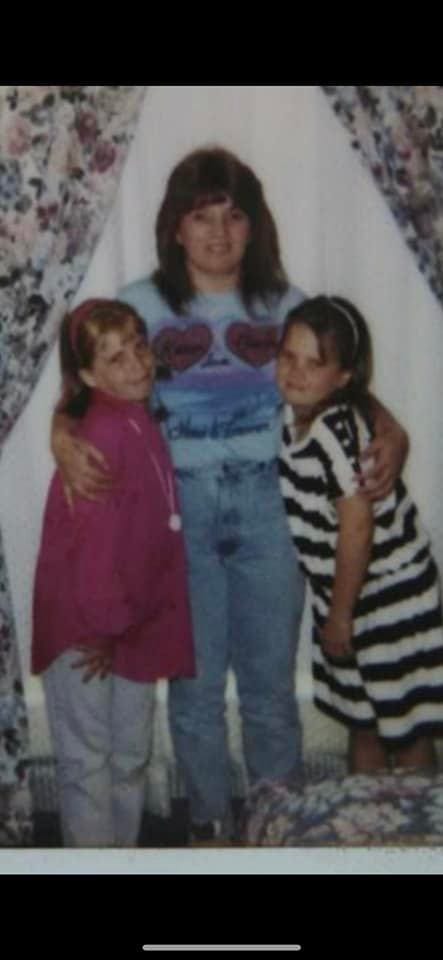
Seeking a fresh start, or perhaps merely fleeing the stagnation of Circleville, the family relocated in June to 1220 Oakleaf in Springfield, Ohio. In June 1989, in Circleville, Karen gave birth to a son named Curtis Edward Boysel, Jr. For a fleeting month, the family was whole. But tragedy, swift and unfathomable, struck at the height of summer; on July 23, 1989, the infant Curtis Jr. died in Springfield. The loss of a child is a sorrow that seeps into the floorboards of a home, poisoning the air. For Karen and Curtis, the grief seemed to fracture whatever fragile bonds held them together, inaugurating a dark, spiraling chapter from which they, and young Amber, would never truly recover.
As Amber grew from a toddler into a young girl, her father’s unraveling became public record. Curtis returned to Circleville, his life fraying at the edges. In the winter of 1993, he was arrested for a grand theft violation. The following summer, in July 1994, he was taken into custody again, this time for disorderly conduct. The arrests were the desperate failings of a man drowning in his own unquiet mind, leaving his daughters adrift in his wake.
By May 11, 1995, the marriage could no longer bear the weight of its collective sorrows; Karen and Curtis finalized their divorce at the Oakleaf residence in Springfield.
Karen, perhaps driven by an urgent need for stability or a tragic compulsion to fill the void, did not wait long to remarry. On November 1, 1995, she wed Charles K. Parsons. But if Karen sought salvation in Parsons, she found only a different breed of ruin. Barely two months into the marriage, in January 1996, Charles Parsons was arrested for drug trafficking, though the case was ultimately dismissed.
Amber was only 10 years old — an age when a child’s universe is meant to be anchored, yet hers was being violently dismantled.
The true horror of his presence was manifested in May of that same year, when he was found guilty of domestic violence. Amber, barely 10, was now trapped in a home defined by the sudden, terrifying eruptions of a violent stepfather.
The marriage to Parsons imploded with inevitable speed, the divorce finalized on November 6, 1997, leaving Karen to relocate her family once more, this time to 823 West Jefferson Street in Springfield.
Amber’s Merry-Go-Round
The concept of “home” for Amber Whitmer became entirely liquid. It was not a place, but a temporary shelter between storms. Her mother’s desperate search for a functional partnership continued unabated. On February 6, 1998, Karen married Michael Anthony Cunningham, moving the family to 37 South Greenmont in Springfield.
Yet the ghosts of marriages past refused to rest. Charles Parsons, the volatile ex-husband, re-entered the orbit of their lives in the summer of 1999, resulting in his conviction for violation of a protection order. At the time, Parsons was residing at 25 West Clark Street, a geographic proximity that undoubtedly kept the family in a state of hyper-vigilance.
Meanwhile, Amber’s biological father, Curtis, had become a ghost himself, fleeing the rusted confines of Ohio for the sun-bleached exile of Florida. In January 2000, he was apprehended via an Ohio governor’s warrant received in Orange County, Florida.
The new millennium brought no reprieve for Amber’s mother. In a tragic mirroring of the violence she had endured, Karen D. Cunningham was arrested three times in 2000 for domestic violence. The first two arrests, in February and April, resulted in guilty verdicts while she lived at 312 North Jackson Street. A third arrest in June, after a move to 322 North Race Street, was ultimately dismissed. By March 2002, living at a new address on 126 North Yellow Springs Street, Karen filed for divorce from Michael Cunningham.
As Amber crossed the threshold into young adulthood, the geographic chaos of her family only intensified. Her father, Curtis, returned to Ohio, oscillating between Circleville and Springfield like a restless spirit. Between 2002 and 2004, he registered new addresses: first on West Main Street in Circleville, then West Mulberry Street, Springfield; North Shaffer Street, Springfield; back to West Main Street, Circleville; and finally 1220 Oakleaf, Springfield — the same address as Karen Whitmer. His return was marked not by redemption, but by further arrests: a drug-possession offense in May 2003, and a community-control violation in September 2004.
For a teenage Amber, these years were a masterclass in impermanence. She learned that love was violent, men were temporary, and a home was merely a mailing address subject to change at a moment’s notice.
(The No. 1 song in America in June 2004 was “Burn,” by Usher.)
The Streets Take Over
It is often said that children are the mirrors of their parents’ unresolved traumas. For Amber, the reflection became terrifyingly clear in late 2005. At 19 years old, living at 778 East Southern Avenue in Springfield, she took her first documented plunge into the abyss.
She did not fall into that world alone, and she did not invent its rules — Springfield’s street economy had its own teachers and its own veterans, the subject of the next installment. But the record of Amber’s own descent begins here.
On November 26, 2005 — a Saturday, two days after Thanksgiving, the temperature hovering in the mid-to-high 30s — Amber Whitmer was arrested for possession of drugs and paraphernalia at 241 South Yellow Springs Street, three blocks from 12 South Light Street. The Springfield police could not prove she was soliciting, so they searched her purse, found drugs, and started a lengthy criminal court record.
Less than a month later, on December 16, 2005, she was arrested for soliciting — the very same spot, just 20 days later and nine days before Christmas, in a day of heavy rain and snow with temperatures in the high 20s. Who stands outside in the rain and snow in the high 20s? Only someone addicted to drugs and needing money for their next fix.
Amber’s chaos of an extended family continued to hum in the background like a dark soundtrack. In October 2006, her former stepfather, Charles Parsons, resurfaced in the judicial system, arrested for aggravated burglary and assault while residing on South Light Street.
The die was cast. Amber had discovered the numbing comfort of narcotics and the grim economics of the streets. Her arrest record stayed clean for a little while, but her body could not; no arrests are listed in Clark County until later in 2007. Then she escalated her desperate survival tactics. Now floating around 3000 Dayton Avenue, in 2007 she was arrested in March for unauthorized use of property, in July for drug paraphernalia, and in December for tampering with evidence and drug paraphernalia.
The net was tightening. The law, which had been a peripheral nuisance in her childhood, was now the defining structure of her adult life.

Marysville
Every true-crime narrative features a purgatory — a place where broken souls are housed together, forced to reckon with their sins in the stark, shadowy light of state supervision. For Amber Whitmer, then 21, this purgatory was the Ohio Reformatory for Women in Marysville, Ohio, which she entered on January 10, 2008.
Prison is an equalizer, a grim sorority of the damned. Just one day after Amber walked through the heavy steel doors, she may have met another woman, Amanda Ward-Romine, a three-year veteran of the facility serving time for trafficking in cocaine — a sentence meant to span 2005 to 2009. In March 2009, another inmate, Ruth Ann Cain, joined their ranks at the Marysville reformatory, and Amber knew her.
These women were bound by their ties to Springfield and the shared geography of their confinement — threads in a dark tapestry woven by the state of Ohio. Their time together in Marysville is a haunting foreshadowing of the fates that awaited them beyond the walls: lives destined for abrupt, violent interruptions and unexplained absences. All three would be dead or missing by 2019.
While Amber counted the days in a concrete cell, the world outside remained as volatile as ever. Her mother, Karen (now going by Parsons again), registered a new address at 778 East Southern Avenue in February 2008. Her father, Curtis, was arrested in June 2008 for domestic violence against a woman named Tina M. Casey, who said they had been cohabiting for eight years.
Amber was finally released from Marysville on December 5, 2009. She stepped out into the biting winter air, theoretically rehabilitated, but the gravity of Springfield and her own chemical demons proved too strong to escape. Freedom, for the profoundly broken, is often just an opportunity to resume the fall.
The Linden Avenue Years
Amber’s post-prison life was a swift, tragic recidivism. Barely a month after her release, in January 2010, she was arrested in Marysville for passing bad checks.
By 2011, she had returned entirely to the nocturnal, desperate economy of Springfield. The addresses changed, but the charges remained a grimly repetitive litany. In late June 2011, she was arrested for prostitution activity at 518 West High Street, associated with a man named Robert Cobb. Weeks later, in July, she was cited for loitering to solicit on South Race Street.
There is a singular, melancholic detail tucked into her September 2011 arrest record: Amber, then 25, was arrested for destruction of evidence at 520 Linden Avenue. The specific evidence? She had broken a glass pipe. In that shattered glass lies the profound desperation of her existence — a fragile, transparent instrument of her addiction, crushed in a fleeting, panicked moment of self-preservation.
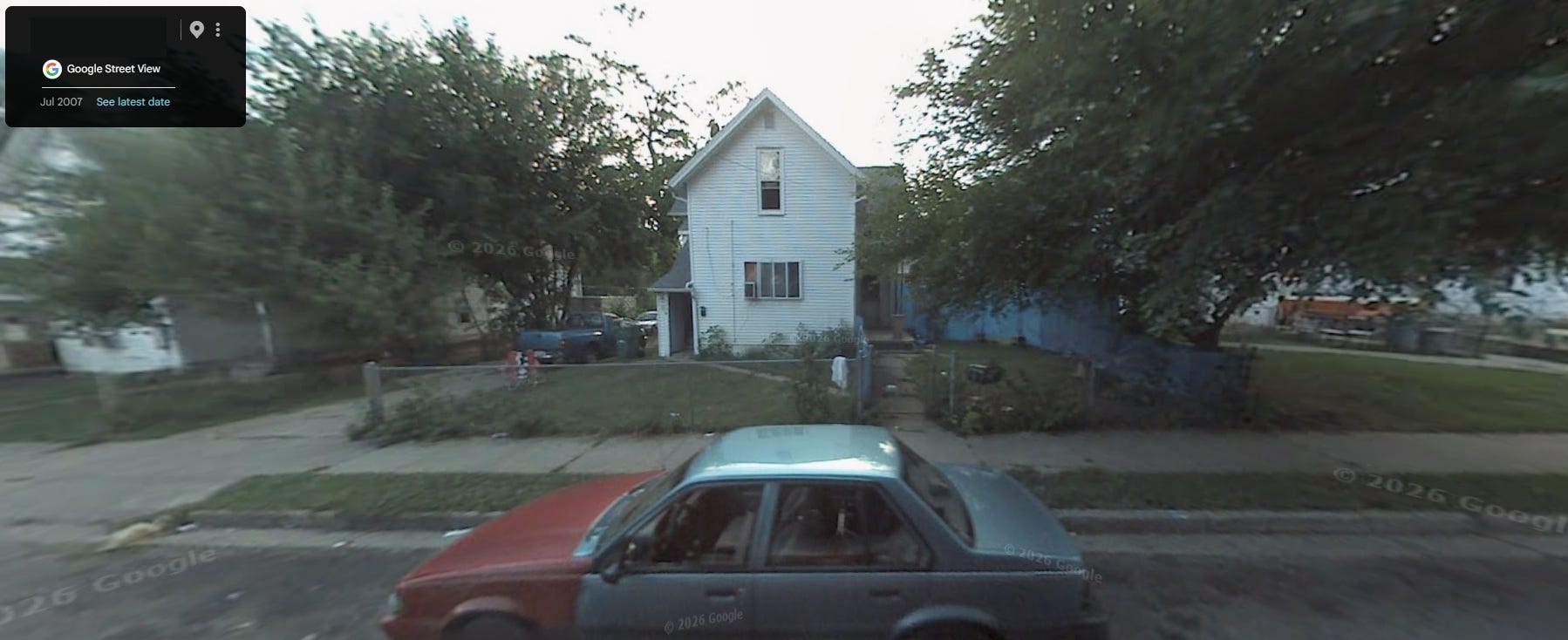
Linden Avenue became the anchor for her final years. In 2012, she was arrested there for possession of drug paraphernalia. In October 2013, then 27, the vice squad caught her in an undercover sting for solicitation. The year 2014 was a blizzard of warrants and vice charges: March brought an arrest for soliciting, paraphernalia, and bench warrants; May saw a prostitution arrest involving an incident with a man named Andrew Fuller; and in July, police found cocaine in her purse during a stop, resulting in another possession charge.
Her father, Curtis, was simultaneously walking his own grim loop; in July 2014, he faced another domestic-violence arrest involving Tina Casey at 13 South Light Street.
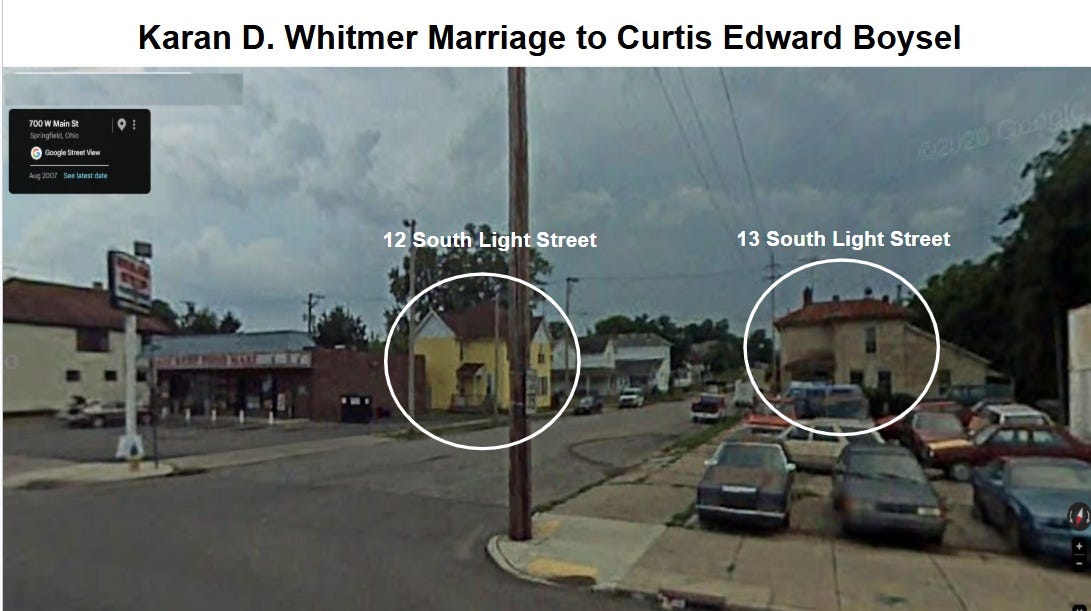
The address directly across the street — 12 South Light Street — is on record as a place where two known murders, and possibly four others, took place. It was the home of Prentiss Hare, who was later convicted of two Springfield murders and identified by prosecutors as a person of interest in four additional homicides.
Through it all, the residential carousel of her mother continued. In April 2014, Karen registered a new address at 143 South Race Street — a ghost-whisper from where Amber was haunting the Springfield pavement, and a stone’s throw from 13 South Light Street.
By September 2015, Amber’s criminal repertoire expanded to complicity to theft, an incident involving an accomplice named Tyjuan Young.
She Simply Evaporated
The end of a life like Amber Whitmer’s rarely arrives with a dramatic crescendo; more often, it is a quiet, unresolved fading into the background static of a forgotten city. Like her fellow Marysville inmate Amanda Ward-Romine, who would go missing in 2013, and Ruth Ann Cain, who would be found deceased in 2019, Amber was destined to become an absence rather than a presence.
The timeline of her disappearance is etched with a heartbreaking irony. The last verified physical sighting of Amber Whitmer alive was on May 28, 2016. She was seen by the one constant, chaotic anchor in her life: her mother, Karen. It was, poetically and tragically, Karen’s birthday. Amber was 30 years old, last seen near the familiar, sorrow-soaked grounds of 520 Linden Avenue.
Weeks later, on June 16, 2016, came the final transmission — a digital ghost, a video and a photograph sent to a contact named Kelly Jo Wallace. In the video, Amber said she was in Cincinnati. She also said Brian Stoops was with her. After that, there was only silence.
No more arrests for broken glass pipes. No more shifting addresses between Circleville and Springfield. Amber Whitmer simply evaporated from the public record, swallowed by the very streets that had dictated the rhythm of her tragic, turbulent existence. The instability of her youth — the procession of angry stepfathers, the fleeing biological father, the countless “Johns” — had a final figure standing at its edge. One “John” stood out. His name was Brian Stoops.
But Amber never walked these corners alone. Before we ask who Brian Stoops is, we have to meet the women who taught the trade on the same streets — and the officers who patrolled them. That’s next.