



The geography of Piqua, Ohio, is characterized by a stark, linear simplicity that mirrors the agrarian and industrial landscapes of the Great Miami River valley. In the early years of the twenty-first century, this town of roughly twenty thousand residents existed in a state of suspended animation, caught between its manufacturing heritage and the creeping modernization of the Dayton metropolitan corridor. The atmosphere in Piqua, particularly during the biting winters of 2003 and 2004, was often defined by a pervasive, monochromatic overcast that settled over the wood-framed duplexes and brick storefronts like a damp wool blanket.
Between 2003 and 2005, a specific residential structure at 327 Wood Street became the vessel for a sequence of events that would fundamentally alter the life of a thirteen-year-old girl named Nikki Forrest. These years represent a critical window of domestic collapse and predatory opportunism — the grim preamble to Nikki’s eventual disappearance in September 2010.
The Man Her Mother Chose
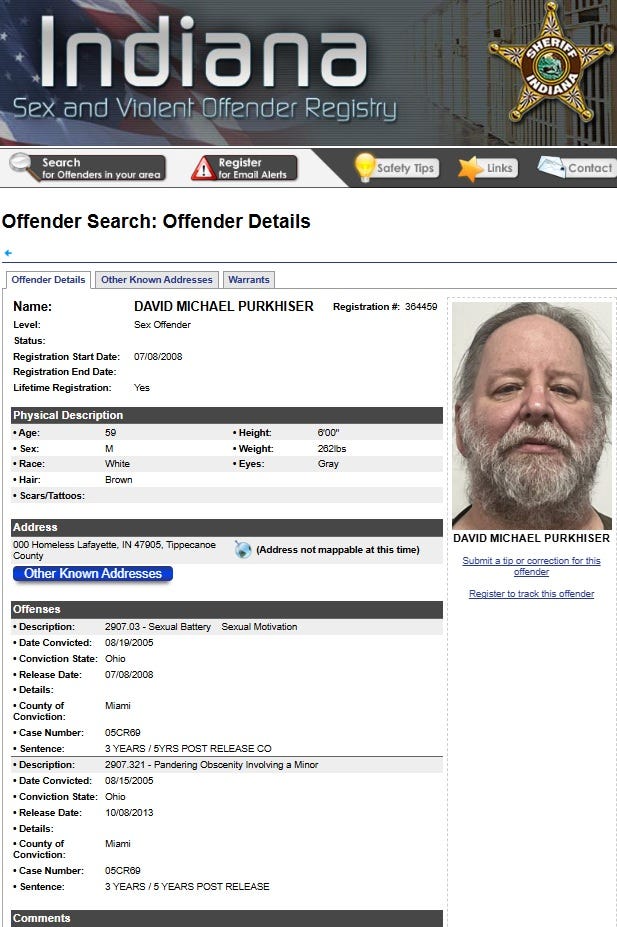
Charles Purkhiser was an Air Force veteran and a Purdue University graduate with two degrees — a Bachelor’s in Agriculture Science and a Master’s in Agriculture Science. On August 19, 1956, he married Barbara Jean May in Brookston, Indiana. Charles and Barbara had two sons, Brian Purkhiser and David Michael Purkhiser (born November 22, 1968), and one daughter, Beth Ann Purkhiser. Later in life, Charles and Barbara lived in Mt. Vernon, Virginia, working on President Washington’s farm before eventually returning to the Indiana town of Monticello.
At some point between 1997 and 1999, David Michael Purkhiser moved from Lafayette, Indiana to Piqua, Ohio. Background information on David Michael Purkhiser prior to this move remains unfound. An exhaustive search for official records detailing his prior residences or law enforcement history before 2003 has returned nothing.
In 2000, Lynn Forrest (age 41) met David Michael Purkhiser (age 32). She introduced him to Nikki (age 10) and eventually to Matthew (age 16). By early 2000, Lynn and David were living together under one roof.
May 31, 2003
It was a Saturday heading into Memorial Day weekend. School was out for the year. It was the 151st day of the year — and it marked the date of an annular solar eclipse.
On May 31, 2003, Nikki’s biological mother, Lynn “Manson” Forrest, died.
David Michael Purkhiser had been living with Lynn since 2000. Now Lynn was dead. Nikki was 13. Her brother Matthew was 19 and living in Texas. Her biological father declined to allow Nikki to move in with him — the full reason remains unclear.
Some say it was due to his current wife, Stephanie Michelle Collins. The whispers say she was busy raising Rickey’s two children, Rickey Jr. and Angel, and that adding Nikki at 13 would put too much strain on her and the marriage. Tammy Weddington told the Dayton Daily News that she persuaded her ex-husband, Rickey Forrest, to give her custody after Forrest’s mother died and he appeared unable to handle her.
Nikki had just lost her mother. Her brother had gone to Texas. Her father had looked away. Every responsible adult in her orbit — her father, her aunt, her step-mothers, the Godmother who had sworn an oath to guide her — made the same calculation in those weeks after Lynn’s death. Collectively, they stepped back. The one person who stepped forward was the man her mother had known for less than three years.
It was David Purkhiser. For reasons unknown — whether by agreement, recommendation, or decree — Purkhiser was placed in custodial care of Nikki Forrest.
In a contradictory statement made by Piqua Police to the Dayton Daily News*, it was Tammy Weddington — Nikki’s step-mother — who had custody of her from the time she was age 12. If this statement is true, there are serious questions that have never been answered: Why was Nikki allowed to be at Purkhiser’s house? Did anyone know? And where was the custodial parent while a 12 and 13-year-old was living under the roof of a man who was not her legal guardian?*
The question of Lynn’s estate and finances is equally troubling. Lynn had been a Hardees Restaurant manager and the former owner of a construction company. There may have been savings, a life insurance policy, even the modest comfort of tucked-away bonds. What we do know is documented in a Websleuths post:
“Nikki’s mother’s grave is in the Riverside Cemetery in Troy, Ohio. She’s in section 10. The only thing marking her grave — since Nikki never had the money to purchase a stone — is a bench and a tin sign with ‘Lynn Forrest’ on it.”
Lynn’s obituary had asked that memorial contributions be made to an educational fund for her daughter, Nikki. There is no record of such a fund existing. The question of money will come up again — but not for five more years.
327 Wood Street
David Purkhiser had an established residence at 327 Wood Street — not an isolated farmstead, but a duplex, a structural design that necessitates a high degree of intimacy and shared awareness. The structure would be condemned and demolished in late 2005.
The residence housed Nikki Lyn Forrest, age 13, and David’s roommate Karl B. Kash, age 42 (DOB August 1, 1961). The other half of the duplex was occupied by David’s neighbor, Orville Fultz. The dining room housed two computers — one belonging to Purkhiser, one to Kash — and the men had access to one another’s machines. This lack of digital boundaries mirrored the lack of physical boundaries throughout the shared yard and the disabled car stashed in the backyard.
The period between October 2003 and September 2004 was the timeframe in which the primary offenses occurred. Nikki Forrest, then thirteen years old, was subjected to repeated acts of sexual battery by Purkhiser. Between October 2003 and September 2004, Purkhiser engaged in sexual acts with the victim while she was 13 and 14 years old. Nikki reported this behavior to her father Rickey Forrest and step-mother Tammy Weddington, who reported it to the police. An investigation began.
The contrast between the mundane routines of a shared duplex — neighbors chatting, roommates at the computers — and the violations occurring within those same walls is the central tension of this forensic reconstruction.
The Investigation — The Private Search Doctrine
The investigation into David Purkhiser was not a sudden rupture but a gradual accumulation of citizen-led observation. When Officer Taylor of the Piqua Police Department learned that Purkhiser had stashed a trash bag in Orville Fultz’s disabled car in the backyard, Taylor did not obtain a warrant. Instead, he remarked that “if someone puts something in my car I’d want to know what was in it.” This prompted Fultz to retrieve the bag — containing adult pornography and lingerie — and hand it to police.
A similar mechanism occurred with Karl Kash. After an initial interview in which he claimed to have seen no pornography, Kash contacted Taylor later that same day to report finding child pornography on disks near Purkhiser’s computer while “looking for a computer game.” These disks formed the basis for five counts of pandering obscenity involving a minor.
The trial court’s refusal to suppress this evidence rested on the “private search doctrine” — the legal principle that the Fourth Amendment’s protection against unreasonable searches and seizures does not apply to searches conducted by private individuals not acting at the direct instruction of the government. This legal nuance highlights the involuntary transparency of the Wood Street duplex — a place where the perpetrator was constantly observed by those he lived alongside, yet he mistakenly believed in the sanctity of his shared spaces.
The Alford Plea and Sentencing
The prosecution of David Purkhiser concluded not with a jury trial but with a negotiated surrender. Purkhiser entered a no-contest plea pursuant to North Carolina v. Alford (1970) — a legal maneuver that allowed him to acknowledge that the state’s evidence was sufficient to convict him while stopping short of admitting guilt.
The court chose a more rigorous sentence than the state recommended:

Running the sentences concurrently meant Purkhiser served three years for the sexual battery charges while the pandering counts were absorbed into the primary term. For Nikki Forrest, the resolution in 2005 marked the end of legal proceedings against her mother’s former companion. It did not mark the end of the trauma.
The Brother Who Left
Lynn Forrest’s death in 2003 had removed the final fragile scaffolding holding Nikki’s world upright. Shortly after, Matthew — perhaps sensing the encroaching rot of a life heading nowhere in a small town — moved toward a different horizon, leaving Nikki without a protector.
Matthew Dawson was a creature of restless motion. To the State of Ohio, he was a series of misdemeanor filings — a man defined by court dockets and traffic citations on I-75. He would eventually make his way to Cedar Park, Texas, where the misdemeanors became felonies: arson, burglary of a building, burglary of a vehicle. In 2008, Case No. 08-461-K277, overseen by Judicial Officer Ken Anderson, resulted in a fifteen-year sentence in the Texas Department of Corrections.
What those court records do not show is this: Nikki wrote to Matthew regularly in prison. Her letters were the documentary evidence of a sister’s love that refused to be invisible — murmurs of a softer time pressed against the concrete reality of his incarceration. They were the one reliable thread of connection left in her life.
In 2010, the letters stopped coming.
Matthew served his sentence and returned to Piqua in late 2023. He came back to a city where his mother was dead and his sister was a missing person. He now understood, in the way that only absence can teach, why the letters had stopped.
A Websleuths post from January 5, 2011, from user Dassala, identifying herself as Nikki’s maternal cousin, documented what happened when the family tried to reach him:
“My mother (her paternal aunt) just received a letter from Matthew, asking us why she hasn’t written him in a while. Apparently, although we asked the Piqua Police to contact him months ago, they never did. We’re not really sure how to tell him that his little sister is nowhere to be found.”
Part III: The Pruning of Nikki Forrest
2005 — 2008
Between Parts II and III lies a gap in the official record — and the most important years of Nikki Forrest’s interior life. The courts had processed her. The state had convicted her abuser. The system had technically done its job. What follows is what happened to the girl after the justice system moved on.
The machinery of justice in the Great Miami Valley has always been a slow-grinding apparatus — a collection of gears and pulleys housed in limestone courthouses where the air smells of old paper and indifference. By the time 2005 arrived, Ohio had spent nearly thirty years constructing a safety net for the wounded, woven from the Crime Victims Compensation Program of 1976 and the federal mercies of the 1984 Victims of Crime Act. In the sterile ledgers of the Attorney General’s Office, Nikki Lyn Forrest was a data point for whom financial aid and crisis counseling existed in the abstract — like a ghost-ship anchored just beyond the fog, visible but unreachable.
There is a profound distance between a law written in a leather-bound book and a hand extended to a trembling fourteen-year-old girl in a Piqua police station. In those middle years of the decade, the system was not a cohesive organism. It was a fragmented map of sovereign counties and individual temperaments — an era before the trauma-informed approach, a time when the psychological architecture of a child was treated with the same blunt instrument as a broken window or a stolen car.
In the modern light of today, a child like Nikki would be met by a multidisciplinary team — a detective, a therapist, and a victim advocate speaking in a unified language to ensure the child is not shattered further by the very process of her salvation. In 2005, Nikki found herself adrift in a landscape where care was a matter of geography and luck. There was no Child Advocacy Center. There was no forensic interviewer trained in adolescent trauma. There was the local officer, the harried prosecutor, and the cold fluorescent reality of the witness stand.
The failure was not an absence of programs but an absence of integration. The system operated on a binary: one was either a “Victim” to be protected or a “Witness” to be utilized. For a girl whose abuser was a fixture of her own domestic scenery — a man who occupied the chair where her mother’s memory still sat — the distinction was lost in the bureaucratic shuffle. The state provided the courtroom and the charges, but it left the fourteen-year-old girl to navigate the ruins of her own life with nothing but the kohl around her eyes to steady her.
At fourteen, the human mind is a house under renovation — emotional corridors wide and echoing, the rooms of logic unfinished, exposed to the elements. Nikki was no longer a child, though the law insisted she was nothing else. She was a survivalist bordering on the edge of womanhood with lived experiences twice her age.
Her lifeline was digital — a ghost-signal sent into the ether. Nikki sat in the blue glow of a computer screen, the rhythmic tock-tock of the keyboard her only companion as she navigated the fledgling wilderness of MySpace. There, among the flickering glitter-gifs, she could curate a version of herself that wasn’t broken. On AOL Instant Messenger, her Away Status was perhaps a curated scrap of poetry or a lyric from My Chemical Romance — a cry for help disguised as a trend.
As noted by the Dayton Daily News*: “(Nikki) got into partying and the ‘Gothic people,’ did not finish high school, but got her GED,” Weddington said. “I was trying to keep control as much as I could. She didn’t want anyone telling her what to do.”*
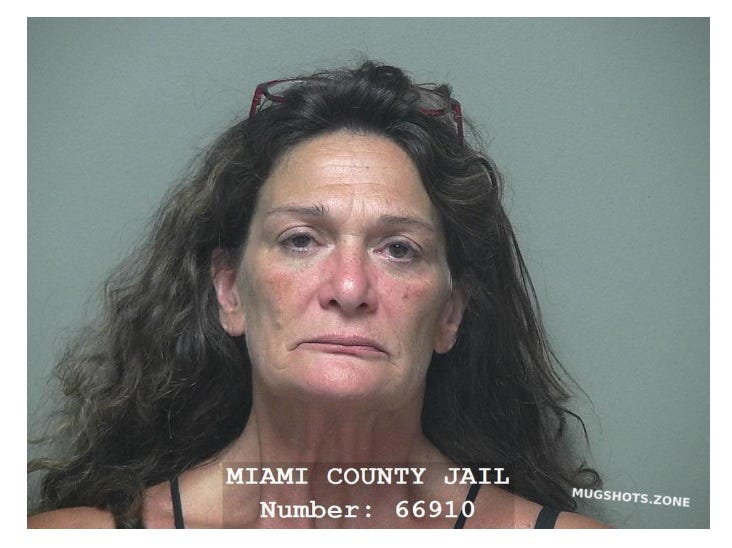
Tammy Weddington told the Dayton Daily News that Nikki “was a good student involved in band, choir, and other activities.” These two portraits — the Gothic girl who didn’t want anyone telling her what to do, and the good student in band and choir — are not contradictions. They are the same girl, seen from different distances, at different stages of the same unraveling.
Not much is known about Nikki’s high school years beyond these fragments. What we do know: she eventually moved out of Tammy Weddington’s home in 2008. Even after she left, she stayed in touch. And in 2008, the couch surfing began — moving between friends and family, trading stability for a roof. Sometime between 2005 and 2008, she was also on prescription medications for ongoing medical issues.
A comment posted on Websleuths by Kate Langston, daughter of Mickey and Daniel Langston, captures the distinction between Nikki’s previous disappearances and what came later:
“Sure, she had run off before, but she wasn’t reliant on medication and she wasn’t out of touch with anyone. She had been living with my mother and father at the time, and she called them within a couple of hours to confess that she’d spent the night at a friend’s house instead of coming home.”
In a stark contrast, Mickey Langston herself told WHIO that her niece was “an upbeat and carefree person. She had a lot of boyfriends and she was just looking for love.”
The Armor She Built
As the years stretched from 2005 toward 2008, Nikki began to redraw the boundaries of her own skin.
She adopted the armor of the Gothic subculture — a visual language of rebellion and protection. She pierced her tongue and ears, and etched her skin with the symbols of her inner landscape. She discarded the soft brown of her hair for a black so deep it seemed to absorb the light around her.
Her skin became a ledger of her psyche.

On her upper right arm sat the Scarecrow from The Wizard of Oz, accompanied by the haunting refrain: “If I only had a brain.” It was a permanent joke told at her own expense — a heartbreaking badge of the insecurity that trauma leaves behind, the belief that one’s own judgment is fundamentally flawed because it failed to predict the unpredictable.
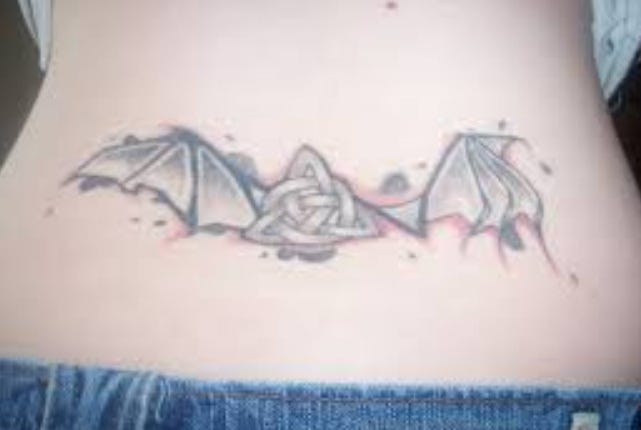
On her lower back, a bat with wings spread wide was caught in the loops of a Celtic knot — a creature of the night bound by ancient, unbreakable geometry. A signal to the outsider tribe that she, too, belonged to the shadows.
But it was the image on her abdomen that served as the most chilling omen: the Death’s-head Hawkmoth. Pulled from the cinematic shadows of The Silence of the Lambs, the moth is a symbol of grotesque metamorphosis — a desperate, violent desire to change into something else, to shed a skin that has become a cage. For Nikki, it was a haunting signifier of a life defined by transformation. Of a girl trying to evolve into something that could no longer be hurt.
Before 2006, Ohio lacked a singular statute governing tattooing and piercing of minors. The oversight was a patchwork of local health department rules. In the neighborhoods of Miami County, the law often stopped at the front door of a private home. This was the era of the “piercing party” — informal gatherings in wood-paneled basements or cramped kitchens where the sting of the needle was not accompanied by the verification of an ID. A fourteen or fifteen-year-old could bypass the safeguards of the state with ease.
For Nikki, these informal settings were likely the only places where she could exert total control over her physical self. In a world where the system had failed to protect her body from violation, she chose to mark it herself — on her own terms, with her own symbols, in her own time. The piercings in her tongue and ears were not mere ornaments. They were the rivets of an armor she was building, piece by piece, to hold herself together.

By 2008, Nikki had moved out of Tammy Weddington’s home for the last time. She was nineteen years old, couch surfing, on medication, carrying the full weight of everything the system had given her and everything it had taken.
Case File 1.3 covers the final chapter — the night of September 24, the day of September 25, and the blue car.