



The last installment ended in 1988, with an 18-year-old Angela Hall facing a drug charge whose court record simply stops.
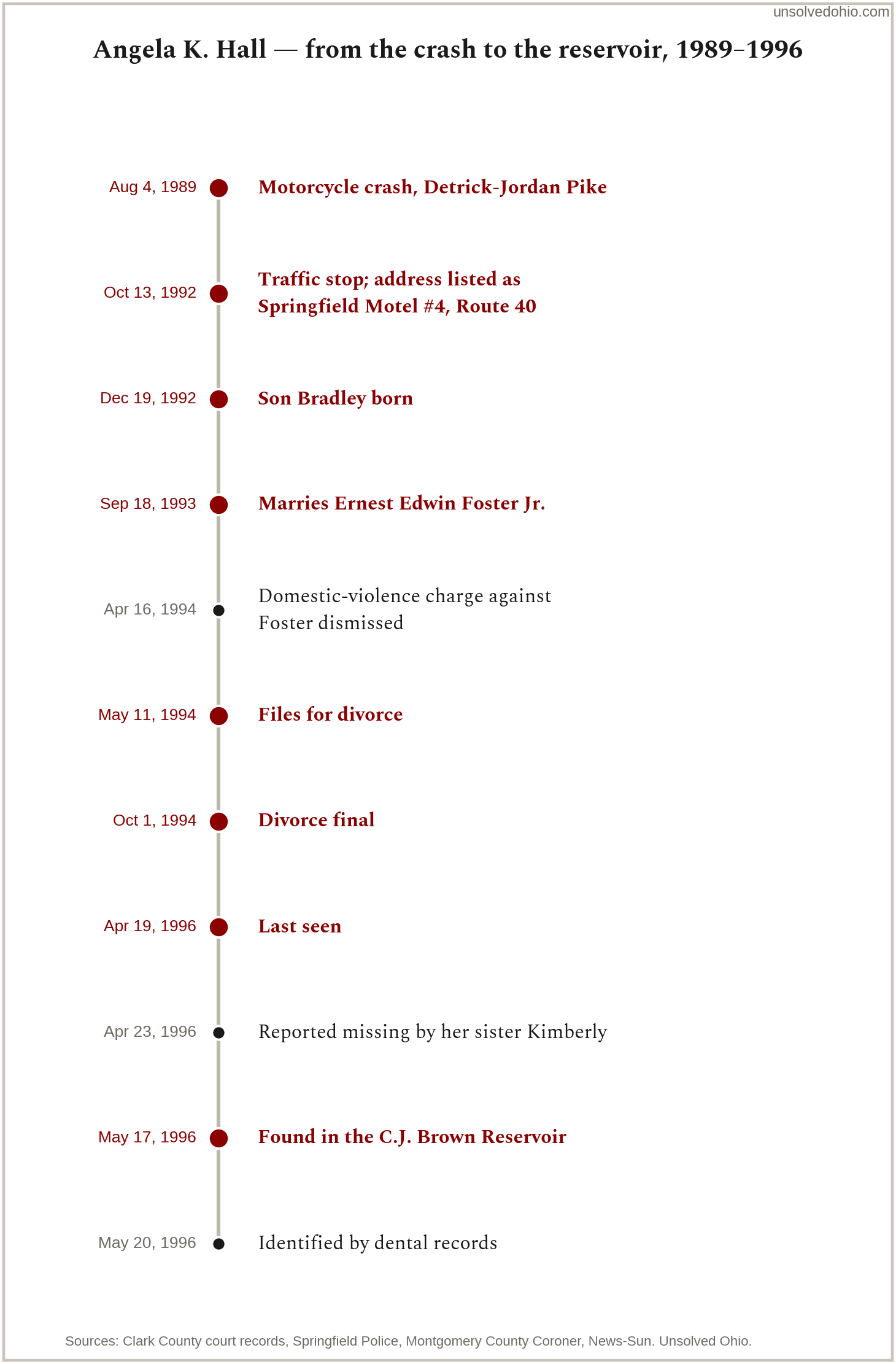
This one covers the seven years that followed. A motorcycle crash on a country road in August 1989 left her with a lifelong limp. By 1992 she was living in a weekly-rate motel on Route 40, pregnant, without a driver’s license. Her son, Bradley, was born six days before Christmas. A marriage in 1993 was over by the fall of 1994.
Then, in April 1996, Angela disappeared. Four weeks later, a canoeist found her in the C.J. Brown Reservoir. What follows is the record of those years and the questions it leaves open.
Andrew Loges, The Man Who Broke an Angel
Our story of Angela could also begin here, a story that could easily be described as the beginning of the end in Angela Hall’s life, because on that Friday night, August 4, 1989, things would never be the same for the girl many called “Angel.” Sadly, in less than seven years from tonight, she would be a victim of an unsolved homicide.
On this summer day on August 4, Springfield recorded a beautiful day with a high temperature of 89°, and by 11:00 PM the temperature dropped to a low of 60°.
Also, at this time in Springfield most young girls were recovering from the New Kids on the Block (NKOTB) fever aftermath; just 10 days prior, on July 25, 1989, the popular boy band performed a raucous, sold-out concert at the Clark County Fair in Springfield that drew over 10,000 screaming fans. “I’ll Be Loving You (Forever)” went to No. 1 in 1989, and so did “Hangin’ Tough.”
It was also the first year Angela (now 19 years old) would not be heading to high school. As with any early August in Springfield, locals were preparing for the upcoming school year, and high school football teams from Springfield North and Springfield South.
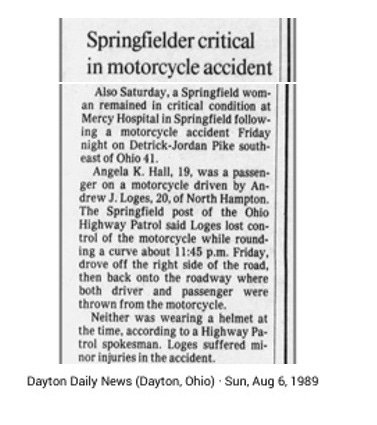
It was the kind of sweltering, unforgiving August night that seemed to swallow the rural roads of Ohio whole, a darkness so absolute it invites a dangerous illusion of invincibility. Shortly before the midnight hour on Friday, August 4, 1989, that illusion was violently shattered on Detrick-Jordan Pike, just southeast of Ohio 41.
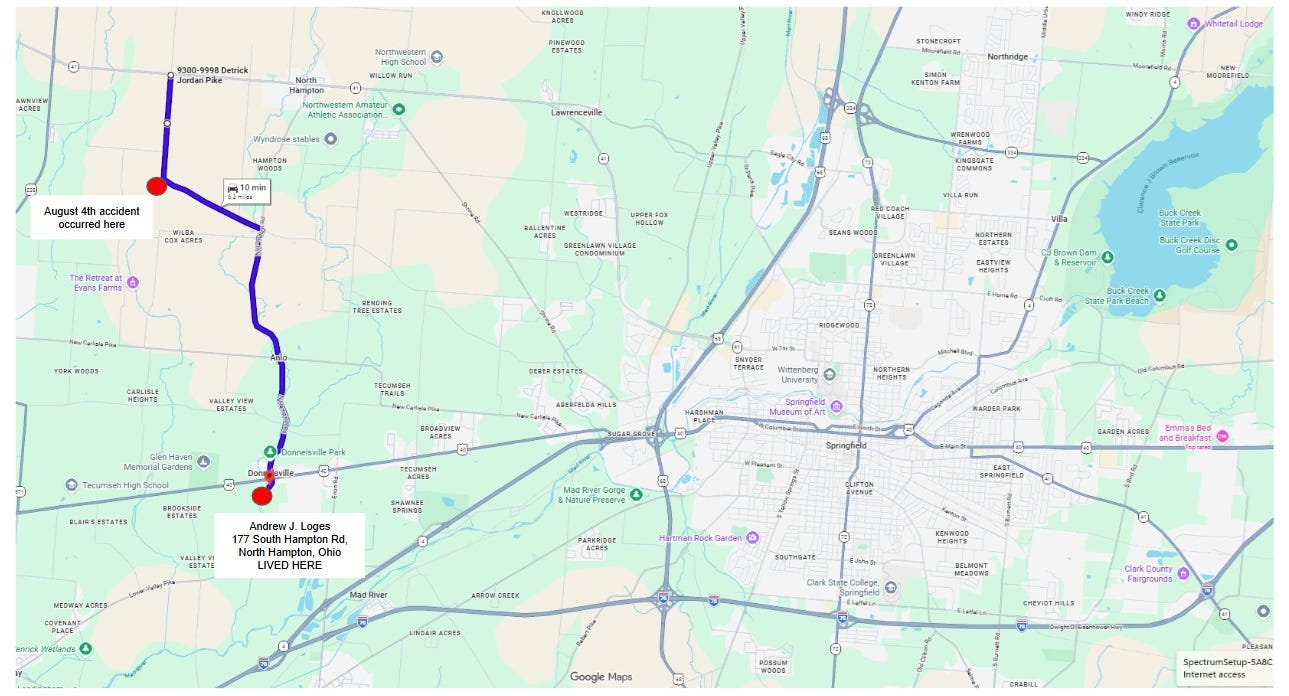
Andrew J. Loges was a young man of 20 who, just two years prior, had graduated from Northwestern High School in Springfield and was now living in North Hampton, Ohio. On this night he was tearing through the quiet country curves on his motorcycle, a 19-year-old girl named Angela K. Hall clinging to him in the rushing wind. Neither wore a helmet; youth, in its arrogance, rarely anticipates its own fragility. As the dark road bent, the machine did not. Loges lost control, the motorcycle plunging off the pavement before violently bucking back onto the asphalt, throwing them both into the unforgiving night. Andrew rose from the wreckage with mere scrapes, the kind of minor injury that faded in a matter of weeks, but Angela did not. Her survival came at a steep, permanent cost: a fractured leg that would bind her to a lifelong limp, and slurred speech that would forever echo the sudden tragedy of that midnight curve.
Who was Andrew to Angela? Was Andrew a friend from school, a romantic boyfriend, or was his motorcycle just a convenient way to get from point A to point B? Another question to ask is, where was Angela going that late Friday night? Where were they heading? Was it to Andrew’s address or another destination? Looking at the navigation that night, Angela was far from her home, but closer to Andrew’s residence in North Hampton, Ohio (177 South Hampton Road, North Hampton, Ohio).
The years that followed left behind a restless, almost spectral paper trail, painting a portrait of a man continually caught in the desperate, quiet hours of the morning. On a mid-March night in 1991, at nearly a quarter past two, Loges was pulled over by the Clark County Sheriff’s Office at the intersection of McAdams and Dale Ridge. Originally cited for driving impaired, the charge was quietly amended in the halls of justice to a “disregard of safety,” leaving him with four points on his license and, perhaps, the lingering ghost of another close call. He remained a creature of the dark; in January of 1993, he was stopped again in the post-midnight stillness, twenty minutes till one, for a dark taillight at Lower Valley and Old Mill.
But the turbulence of his twenties was not confined merely to the highways. By the late summer of 1993, the quiet chaos of his life had spilled indoors. Living in Springfield on South Belmont Avenue with Cassandra D. Loges, the couple found themselves facing a civil eviction brought forth by Phyllis W. Greene. By September, a writ of restitution allowed the unceremonious, public dismantling of a shared life, though the court eventually dismissed the matter without prejudice the following summer. Through it all, the road continued to call him, often with the same reckless urgency. Just days before that eviction writ, at half-past three in the morning on westbound U.S. 40, the Ohio State Highway Patrol caught him without his seatbelt. It was a minor infraction resolved by a simple forfeiture of bond, but one that cemented a persistent picture of a man deeply reluctant to be tethered.
As the decades turned and the restlessness of youth began to harden into middle-aged routine, the speed never entirely left his blood. There were afternoons in 2004 when a vehicle registered to an address on Behm Road in Obetz was flying past I-675 on westbound I-70 at over 60 miles an hour, and rainy September days in 2006 when he was cited for driving too fast for the conditions on State Route 235. He was always moving, always hurrying toward some invisible destination. Yet, time is the ultimate pacifier.

By 2026, the reckless boy from North Hampton had settled into the quiet, structured life of a 57-year-old man. Residing on the neat, unassuming stretch of Westhafer Road in Vandalia, he now walks the institutional halls of the Miami Valley Career Tech. It is an ordinary, quiet existence, miles away from the roaring engines and shattered glass of 1989, though one must wonder if, in the dead of night, he still hears the wind rushing past, or the heavy, uneven footfall of a limp he cannot undo.
No Driver’s License, No Home, No Job… Just a Motel Room
It was now 1992, four years after the motorcycle crash and four years prior to her death. On Friday, July 10, 1992, Angela's younger sister, Michelle, gave birth to her second child, a baby boy named Kurtis.
On October 13, 1992, at 7:05 AM, a two-door 1979 maroon Pontiac with Ohio license plate KBY113 was making a right turn on a red light from Leffel's Lane onto Burnett Road; Angela did not see the oncoming car. She pulled out, and at the last second, the driver swerved, just missing Angela. However, across the street, watching in disbelief, was an Ohio State Highway Patrol (OSHP) vehicle. On go the red lights, and Angela was pulled over. The incident could have turned out differently; you see, Angela was seven months pregnant. Angela was cited by OSHP for failure of right of way, a moving traffic violation. Hall pleaded guilty and was found guilty. Angela had two points assessed to her record by the BMV. The court ordered a two-month license suspension unless she provided proof of insurance. Her license was ordered forfeited on November 2, 1992, and was canceled to the BMV on December 4. Angela eventually paid the fine, a total of $80, but it was not until April 23, 1993. Finally, her balance for all court fines and city court costs was cleared.
Case Number: 9217008/1 — Angela K. Hall's residence was listed as Springfield Motel #4, 4040 East National Road, Springfield, OH 45505.
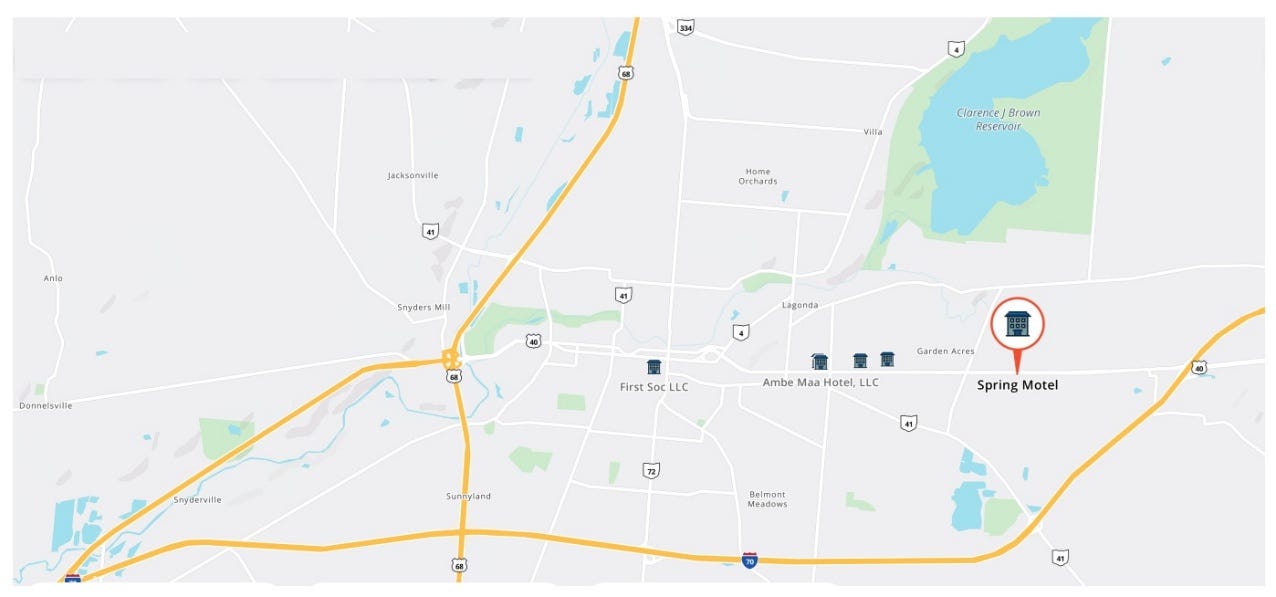
Sitting at the east main highway entrance to Springfield on historic Route 40 is the Springfield Motel. The data suggests it was built circa 1945–1950. The motel operated for decades as a classic mid-century L-shaped motor court. The motel remained operational well into the late 2000s and early 2010s, eventually transitioning to function as low-income weekly lodging rather than a traditional nightly motel. No information was found on a definitive closing date in the public record. But looking at it now (2026) — it is clearly not a place one wishes to inhabit.
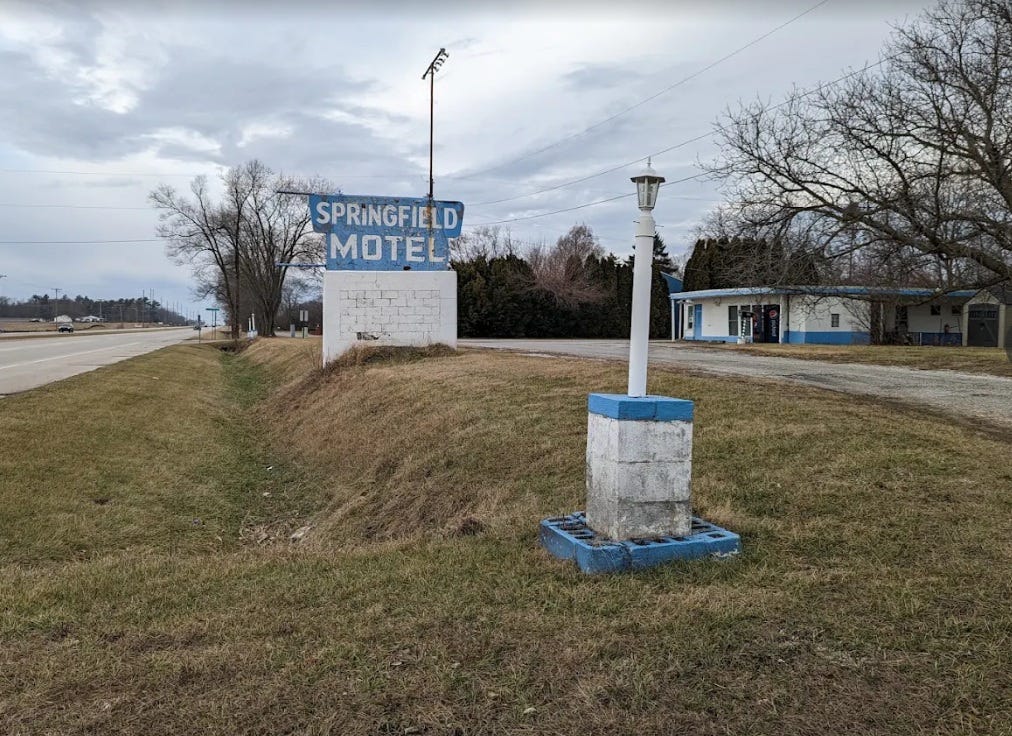
November 2, 1992 (eight months pregnant): Angel has her license suspended. She is not allowed to drive, she is living off Highway 40, living in a motel (paying weekly rate), she has no job or no income, no money to pay her recent traffic fine, and it is December 19, 1992, six days before Christmas. On this day, Angel gives birth to a beautiful, wonderful child; he is named Bradley Hall.
In our search, no records were found naming the father of Bradley.
Did Sandra, Bill, Kimberly, or even Michelle know that Angela was destitute, living in a rundown motel, or was this Angela’s life by design and choice? The facts suggest Angela was heavily into drugs and alcohol prior to Bradley’s birth. Reports will show in further chapters, there exist some questions as to Angela’s alleged occupation of soliciting and selling drugs to support her lifestyle, as well as using drugs.
On April 22, 2019, Incident with Bradley.
The records point out that under Case Number: 19-CCS000003032, Deputy William Crump wrote in his report: "Bradley has severe ADHD and has low functioning mental capacity. He was born with Fetal Alcohol Syndrome. Bradley knows what he did and apologized several times throughout the arrest."On February 5, 2021, Incident with Bradley.
The records point out that under Case Number: 21-CCS000000862, Sheriff Deputy Shaw wrote in his report: "Deputy Penewit and I arrived on scene and met with Bradley. Bradley is a twenty-eight-year-old male. Bradley has mental health issues and does not have the mentality of a twenty-eight-year-old."
To understand the tragedy of April 19, 1996, one must first look at the incidents of 1993 that influenced Angela Hall. It was December 19, 1992, six days before Christmas, and on that day, Angel gives birth to a beautiful, wonderful child; he is named Bradley Hall. In 12 days, Angel and baby Bradley will ring in the New Year.
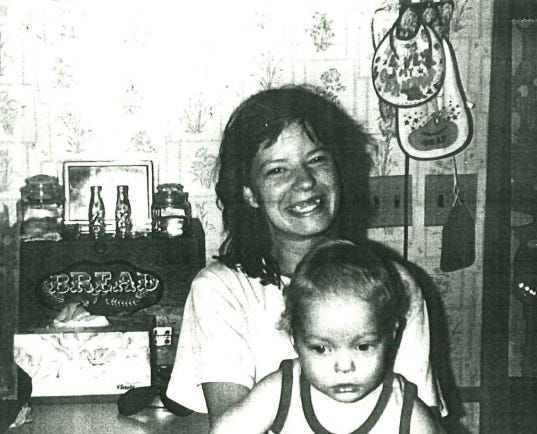
The newborn baby boy and his mother are living in a motel room; the mother has no driver's license, no income, and a baby needs the special attention: food, diapers, formula, and so much more. The online Google reviews of the Springfield Motel are not good:
"A lot of times we didn't have hot water,"
"Trash place,"
"Hooker Motel,"
"I give it 1 out of 5 stars,"
"We stayed there for three and a half weeks they gave you two toilet papers for a week."
Our research has a gap between January and September 1993.
What we do know is this: Ernest Edwin Foster Jr., based on court records, had a listed address at 2125 South Tecumseh Road (Lot 4) from August 1, 1991, to April 30, 1996.
As posted in the Springfield News-Sun (Saturday, September 18, 1993): "Ernest Edwin Foster Jr. (age 43) of 2125 South Tecumseh Road (Press Operator) Marries Angela Kay Hall (age 23) of 2125 South Tecumseh Road (Lot 4)."
Again, we do not know if Ernest is the father of Bradley, but it is easy enough to make the leap to suggest Angela, at the very least, moved to 2125 South Tecumseh Road trailer park before September 18, 1993. After all, the news listed her address as "2125." Whatever the date of move-in, there was likely to be some dating period between Ernest and Angela. After all, it's a big jump to join into matrimony with a woman who has a 9-month-old baby (unless you are the father of her child). It is notable that the records remain silent on a name change for Angela; we found no documentation of a change from Angela Hall to Angela Foster.
To understand the shadow that fell over Angela, one must examine the tangled, peripatetic life of the man she briefly called her husband: Ernest Edwin Foster Jr.
Ernest was born in 1950. Ernest’s life was a revolving door of addresses, court dockets, and fleeting marriages. His documented marital history began in the twilight of the 1970s.
On June 30, 1979, at the recorded age of 20, he married a woman named Mary Elizabeth Taylor. The union eventually withered, ending in divorce in 1984.
By November of that same year, Ernest’s address was recorded at 911 North Street in Springfield, Ohio. He did not remain a bachelor for long; on Christmas Eve, December 24, 1984, he married his second wife, Kathy Sue Snyder. The geography of Ernest Foster’s life was rooted in the transient spaces of Springfield. On August 1, 1991, he established a residence at 2126 South Tecumseh Road, Lot 4. That same year, 1991, his marriage to Kathy Sue Snyder ended in divorce.
Two years later, on September 18, 1993, the 43-year-old Ernest married 23-year-old Angela Kay Hall. It was a union destined for a rapid and total collapse. Violence, or at least the accusation of it, began to orbit his public record. On April 16, 1994, a domestic violence charge against Ernest was dismissed. The victim in this incident remains stubbornly unknown, but the location associated with the fractured event was 1419½ Mound Street. Less than a month later, on May 11, 1994, divorce papers from Angela Kay Hall were filed in the local courts. The severance of their brief marriage was finalized on October 1, 1994.
Angel Hall and the Missing Person Report
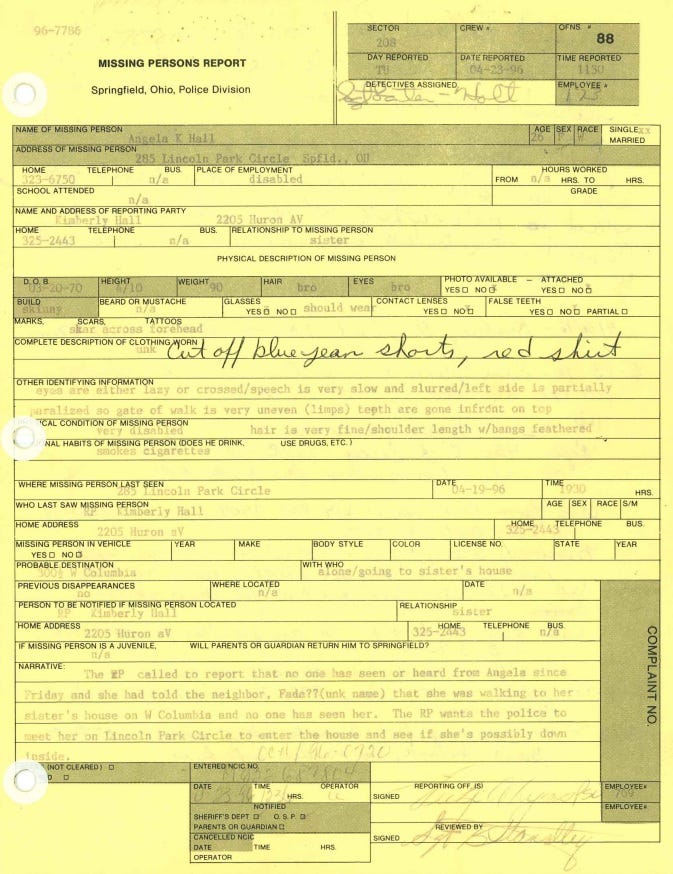
On April 23, 1996, Angela's sister, Kimberly Hall, walked into the Springfield Police Department and filed a missing person report. Angela had gone missing for weeks; finally, the psychological torture for the Hall family had to be confronted.
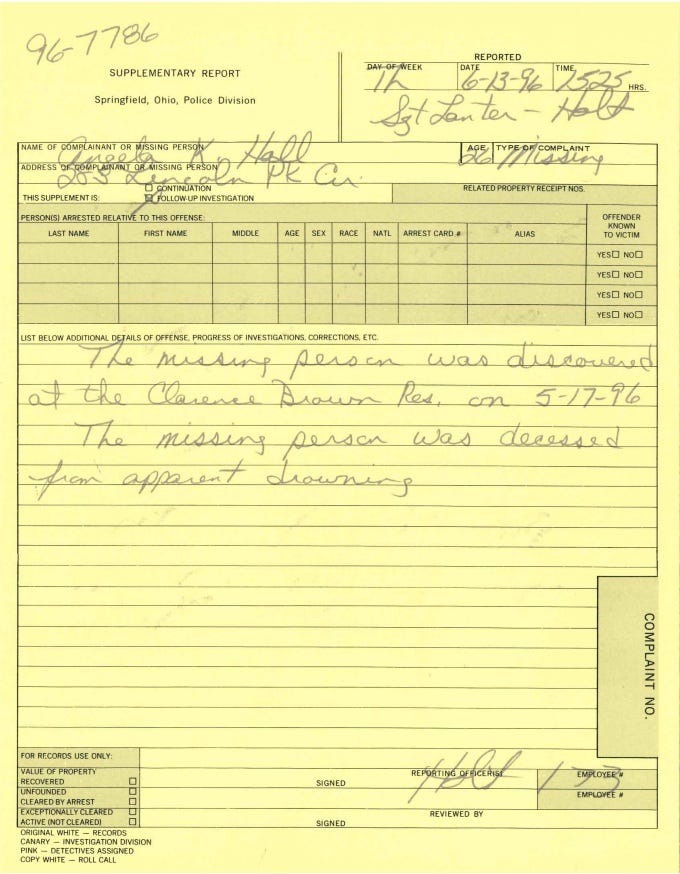
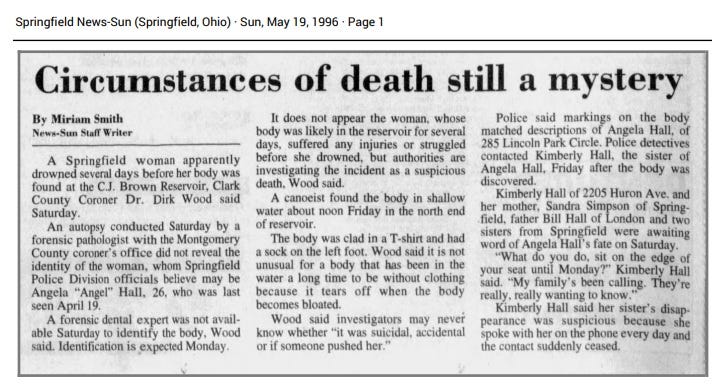
At approximately noon on Friday, May 17, under the pale spring sun, a lone canoeist named Larry Cisler was gliding across the shallow, isolated waters at the northern end of the reservoir. Drifting just beneath the surface was the heavily decomposed body of a small woman. She had been stripped of her identity and her dignity, recovered wearing only a T-shirt and a single sock clinging to her left foot. Three days later, a forensic dental expert matched the teeth, officially confirming what the Hall family already knew in their marrow. Angel was dead.
The autopsy protocol, a document of clinical detachment, fundamentally rewrote the narrative of her death. The streets had whispered of a sadistic, drawn-out beating, but the pathologist found no shattered skull, no fractured cervical spine, and no crushed hyoid bone to suggest a violent strangulation. Her physical trauma was tragically minimal: a faint, one-inch contusion on the left parietal region of her scalp.
Montgomery County Coroner's Office, Case CC-1159-96 — Postmortem Examination and Toxicology Report, Angela K. Hall (examined May 18, 1996)
Dr. Lee D. Lehman's postmortem examination, begun at 8:30 a.m. on May 18, 1996, with the toxicology report completed May 31. Look for the one-inch contusion under 'Evidence of Injury,' the intact hyoid and unfractured cervical spine under 'Neck,' and the empty stomach and bladder — and note that the pathologic diagnoses on page one read 'found in body of water' and 'cocaine intoxication,' not drowning.
The cause of death: Freshwater drowning paired with cocaine intoxication.
To a forensic criminologist, the medical evidence paints a picture far more heartbreaking than a premeditated thrill-kill. It speaks of an incidental, heat-of-the-moment death followed by a panicked disposal. Angela was not beaten to death; she was likely shoved or pushed into the water.
The aftermath of Angela’s homicide was not a pursuit of justice, but a slow, agonizing fade into the filing cabinets of cold-case detectives. The Clark County Coroner, citing the murky circumstances, reluctantly signed her death certificate with the manner of death listed as “Undetermined.”
Without a confession or a concrete crime scene, there was nothing else to do.
But the truest tragedy was reserved for the Hall bloodline, a family upon which a generational curse seemed to have settled. The loss of Angela was only the beginning of an unfathomable erosion. Michelle, the fierce middle sister who had marched into the Nite Owl Bar demanding answers from pimps and bartenders, would eventually be swallowed by the very same darkness. Burdened by grief, addiction, and domestic violence, Michelle stepped out of her life in September 2009 and vanished without a trace, joining Angela as another phantom in the police blotters. In 2018, the youngest sister, Heather, who had watched the violence decimate her family from the periphery, died quietly of cancer in a hospital bed as the Ohio wind rattled the glass.
Today, the C.J. Brown Reservoir remains a placid, beautiful mirror reflecting the Midwestern sky. There is no monument on the northern bank where Angela Hall slipped beneath the surface, just as there is no plaque on West Main Street for the women who stepped into cars and never returned. Springfield endures, its rusted factories and fading storefronts keeping their violent counsel. Angela Kay Hall remains suspended in time — a 90-pound girl with a sweet smile and a broken body, eternally searching for a safe way home through a town that had none to offer. That is the story of Angela Hall, or is it? What really happened between October 1, 1994, and May 17, 1996?
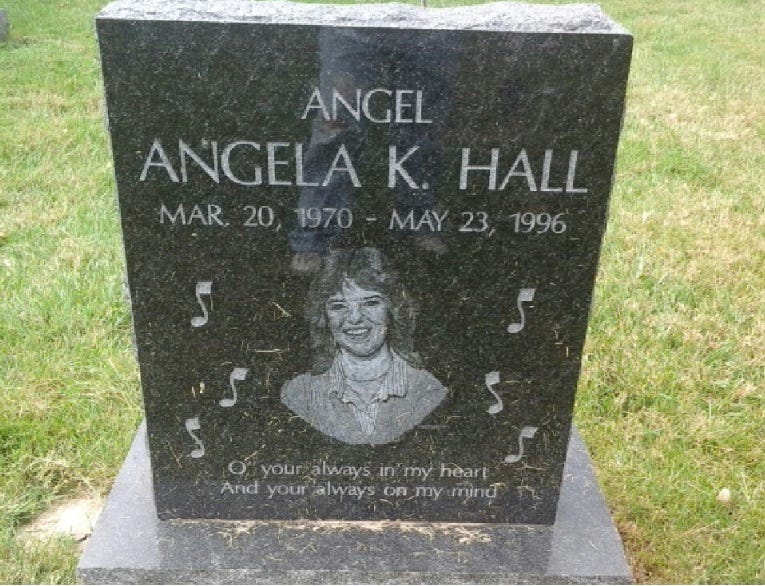
Here is the story NO ONE has ever heard until now.
This Wasn’t Accidental — Our Evidence Suggests Homicide
For decades, the narrative surrounding Angela Hall has been accepted at face value. But what really happened between October 1, 1994, and May 17, 1996? Once you uncover the facts, you will completely rethink everything you thought you knew about “accidental death.” The evidence points to one inescapable conclusion: this was a homicide.
And for the first time ever, the real truth is coming to light.
“The details don’t lie, even when the official record does.”
Don’t Miss a Single Revelation
Cases like Angela Hall’s demand accountability, transparency, and a commitment to the truth. Don’t wait for mainstream media to catch up.
Subscribe to Unsolved Ohio today to get the full story, access the complete evidentiary archive, and see how professional investigative analysis breaks open a cold case.
This installment describes public court, traffic, and police records concerning identified individuals, some of whom are living. No one named here has been charged in connection with the death of Angela K. Hall, and every person is presumed innocent; charges are reported as charges, and the 1994 domestic-violence charge described here was dismissed. The official manner of Angela's death is Undetermined: where this account calls it a homicide, that is the investigators' conclusion, which later installments set out, and where it reconstructs how she may have died, that is one reading of the evidence, not a finding of fact. Unsolved Ohio reports from public court records, official registries, documented media reports, on-record interviews, and open-source analysis using Artificial Intelligence and Social Network Analysis; a documented association is never proof of a crime. This is an educational publication and not legal advice. If you have information about Angela K. Hall's death, submit it at unsolvedohio.com — your name is never published without your written permission, and we correct factual errors promptly. Full terms: Disclaimer.